
Hail Damage Roof Signs You Can Spot From the Ground
The frustrating thing about hail is that it does its worst work where you cannot see it, then leaves the front of your house looking completely normal.
The useful hail damage roof signs are mostly not on the roof at all. They are in the yard, on the soft metal around the house, and on the ceilings inside. If you know what to look at after a storm, you can tell in about ten minutes whether the roof deserves a closer look, without ever putting a ladder against the house.

We have been sorting real hail damage from ordinary wear on North Texas roofs since 2000. Here is the order we check things in.
What are the first hail damage roof signs to look for?
Start with the things at eye level that dent easily, because they record the storm accurately and you can inspect them standing up.

Soft metal around the house is the best early indicator there is. Look at the metal caps on plumbing vents, the fins on your air conditioning unit, the mailbox, the garage door, and any window screens. Hail large enough and hard enough to bruise a shingle will almost always leave marks on at least one of those.
If the soft metal around your house is untouched, the roof is usually fine too. If the vent caps are pocked and the condenser fins are flattened in a random scatter pattern, something up there took the same beating. That is the point where a proper look is worth it, and it is exactly what our storm and hail damage roof repair page is about.
What does hail leave in your yard?
Granules, shingle fragments, and leaf litter stripped off the trees, all of it arriving at once.
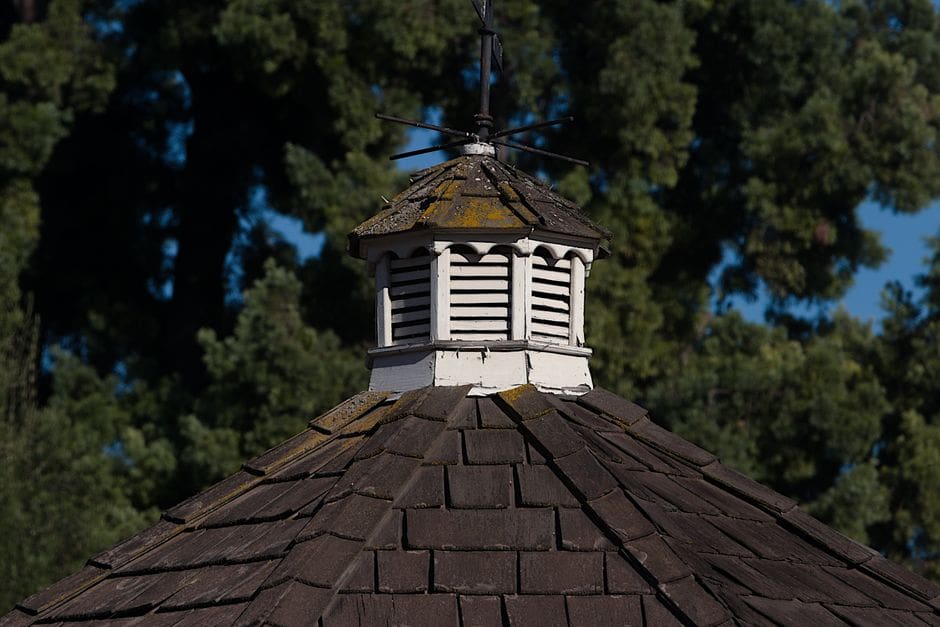
Walk the perimeter of the house the morning after and look down. What you are hoping not to find:
- Piles of granule grit on the driveway apron, the patio, or in the flower beds under the roofline. Some granule loss is normal over years. A sudden pile after one storm is not.
- Shingle fragments or whole tabs in the yard. Something let go up there.
- A carpet of stripped leaves and small branches. If the hail was violent enough to strip the trees, it was violent enough to bruise asphalt.
- Dents in the soft ground or in patio furniture. Useful for judging how big the stones actually were.
Hail size drives everything. NOAA’s National Severe Storms Laboratory explains how hailstones form and why the same storm drops very different sizes across a few streets, which is why your neighbor can have a wrecked roof while yours came through clean.
Can you actually see hail damage on a roof from the ground?
Rarely, and this is the part that catches homeowners out. Genuine hail bruising is often invisible from sixty feet away.
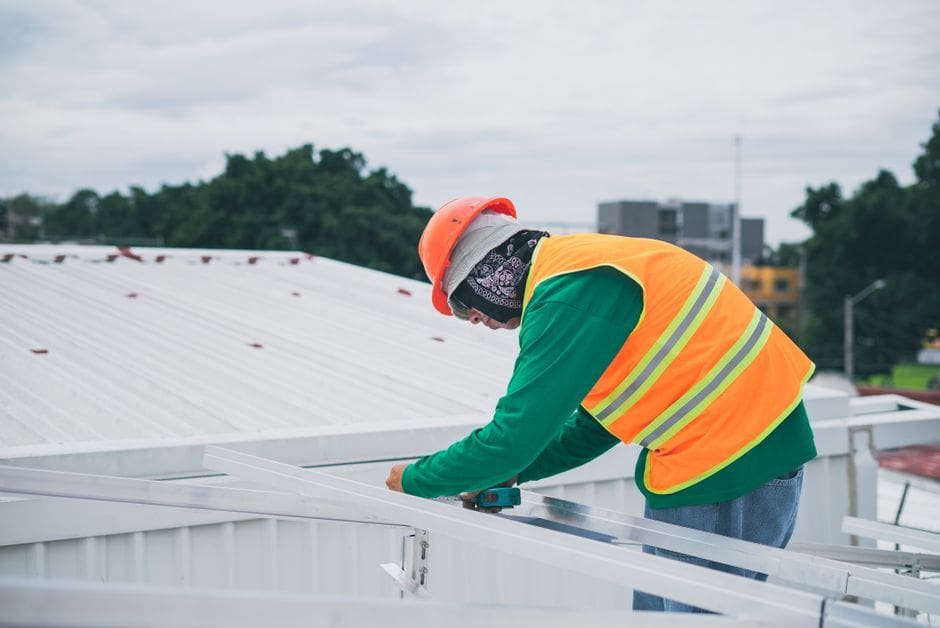
A hail strike on an asphalt shingle usually knocks the granules off a small circle and bruises the mat underneath. From the ground that reads as a slightly darker speckle, if you can see it at all. It does not look like a hole. The roof keeps working for a while, which is why people assume nothing happened, and then the exposed asphalt weathers through and the leak shows up a year or two later.
What you sometimes can see from the ground is bruising concentrated along a ridge line, or a scatter of dark spots on the slope facing the direction the storm came from. Ordinary wear looks nothing like this, and our comparison of hail damage against normal roof wear goes through the differences properly.
What hail damage signs show up inside the house?
Ceiling stains and attic daylight, usually weeks or months after the storm rather than the same night.

Go up into the attic with a flashlight and look at the underside of the decking, particularly on whichever slope faced the storm. Fresh water marks, damp insulation, or any daylight where there should not be daylight are all worth acting on. Then check your ceilings, especially upstairs corners and around chimneys, for the faint brown rings that mean water has already been through.
The lag is what makes this awkward. North Texas gets hit often enough that a slow leak can easily start with a storm two seasons back. The National Weather Service office in Fort Worth logs the severe weather moving through our counties, and NOAA recorded 21 major hail events in Collin County in 2025 alone. That is a lot of chances for a roof to pick up damage nobody noticed at the time.
If a storm has just come through and you want the full sequence rather than only the signs, our post on what to do after a North Texas hailstorm lays it out step by step.
What should you do if you find these signs?
Get somebody up there who will tell you the truth, and take your time about choosing who.

Photograph what you found on the ground while it is still there. Note the date of the storm. Then have the roof looked at properly, because everything that actually matters is happening at shingle level where you cannot see it.
One word of caution. After every decent storm, crews turn up from out of town with clipboards and same day availability. If somebody knocks and already knows your roof is totaled before they have been up on it, that is a heck of a magic trick. A good number of those crews are gone before the first problem surfaces.
We have been family run in Plano since 2000, we run our own crews rather than a subcontracted team we have never met, we put every quote in writing, and we sweep the yard and the driveway with a magnet before we leave. About half our inspections end with us telling the homeowner the roof is fine. That is a terrible sales strategy, and we do it anyway.
Frequently asked questions
How soon after a hailstorm should I check my roof? Check the ground level signs within a day or two while the granules and fragments are still where they landed. Rain and wind clear the evidence quickly.
Does small hail damage a roof? Sometimes. Stone size matters, but so do wind speed, the angle it hit at, and how old and brittle the shingles already were. A heat aged roof can be bruised by hail that a newer roof would shrug off.
Will hail damage always leak straight away? No, and that is the trap. Hail knocks the protective granules off and bruises the mat underneath. The shingle keeps shedding water for a while, then weathers through, and the leak appears much later.
Can I check my own roof for hail damage? Check the ground level signs yourself, absolutely. Getting on a roof after a storm is genuinely dangerous, and bruising is difficult to identify unless you look at it every week for a living.
Get a straight answer about your roof
If the vent caps are dented and the driveway is covered in grit, it is worth knowing what is actually happening up there. Book a free, no obligation roof inspection and we will go up, photograph what we find, and tell you honestly whether anything needs doing. No pressure, just an honest look.